
Finding a buried wastewater tank can seem difficult when no lid or marker appears in your yard. Finding a septic tank starts with records, plumbing clues, and careful outdoor inspection. You can often narrow the search before digging or paying a professional.
Direct answer: Start with your county or local health department and request the property’s septic permit or as-built drawing. If records are unavailable, find where the main sewer pipe exits your house and follow that direction outside. Look for lids, risers, unusual ground contours, or other system clues before probing carefully.
| What to check | What it can tell you |
|---|---|
| Septic permit or as-built drawing | Approximate tank and drainfield locations |
| Main building sewer | Direction wastewater travels from the house |
| Yard lids or risers | Possible tank access points |
| Mounds or depressions | Possible underground system components |
| Soil probe | Helps confirm a buried structure |
| Local septic professional | Can locate difficult or older systems safely |
What You’ll Need Before You Start
You don’t need heavy excavation equipment for the first stages of the search. Basic property information and a few simple tools can usually narrow the location. Stop immediately if you encounter electrical, gas, or other buried utilities.
Useful items include:
- Property records or an as-built septic drawing
- Flashlight for inspecting a basement or crawl space
- Tape measure
- Thin septic or soil probe
- Small shovel or hand trowel
- Marking flags
- Work gloves
- Local utility-marking information
The U.S. Environmental Protection Agency recommends reviewing property records when confirming whether a home uses an onsite wastewater system. Building permits and design plans may contain useful location information. Your local health or environmental department may also keep installation records.
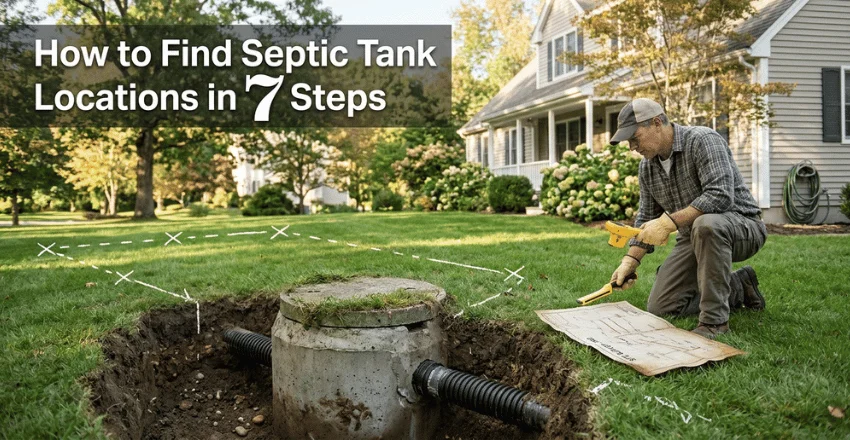
How to Find Septic Tank Locations in 7 Steps
1. Check Your Property Records First
Start with paperwork before walking around the yard with a shovel. Your county health department may have a septic permit, site plan, or as-built drawing. These documents can show measured locations for major system components.
Also check your closing documents, inspection report, property survey, and previous pumping receipts. A former owner may have marked access points during earlier maintenance. The EPA recommends using an as-built drawing when available.
If you bought the home recently, contact the seller or real estate agent. They may remember where pumping crews entered the system. This approach can save considerable searching and unnecessary digging.
2. Find Where the Main Sewer Pipe Leaves the House
Next, inspect your basement, crawl space, or lowest plumbing area. Look for the large drain pipe that carries household wastewater through the foundation. Its exit point gives you a useful starting direction. If you notice damp foundation walls while you look, this guide to sealing basement walls covers moisture problems separately.
Walk outside from that section of the foundation and continue along the same general line. Conventional installations often place the buried tank relatively close to the building. EPA guidance says an access riser or tank may commonly be found around 10 feet from the building.
Don’t assume every installation follows a perfectly straight route. Property shape, terrain, wells, waterways, and local setback rules can affect placement. Use the sewer line as a guide, not an exact guarantee.
3. Look for Visible Clues in the Yard
Walk slowly through the likely area and study the ground surface. Look for round plastic lids, concrete covers, inspection ports, or slightly raised access points. Newer systems may have green or black riser lids near ground level.
Older installations can be harder to spot because access covers may be buried. Slight depressions, unusual mounds, or areas with different grass growth can suggest disturbed soil. These clues should narrow the search, not prove the location alone.
Avoid relying on unusually green grass as your only clue. Healthy grass can result from irrigation, shade, or soil differences. Wet, spongy ground or sewage odors may indicate a malfunction that needs professional attention.
4. Use the Drainfield to Narrow the Search
In a conventional system, the drainfield sits downstream from the treatment tank. Finding the general field area can help you work backward toward the house. The buried chamber normally sits between the building sewer and that field.
Look for a broad area kept free of structures, large trees, or heavy vehicle traffic. Some systems use a raised mound because local soil conditions require a different treatment design. EPA materials note that system layouts vary with soil, groundwater, and site conditions.
Don’t dig randomly through a suspected drainfield. Pipes can sit below the surface and may be damaged by aggressive excavation. Mark possible boundaries and continue with less disruptive methods.
5. Probe the Ground Carefully
A thin soil probe can help confirm a suspected buried structure. Insert it gently at intervals along the likely sewer route. A solid, consistent surface beneath several nearby points may indicate the top or edge of a tank.
Probe slowly and never force the rod through resistance. Buried pipes, wires, irrigation equipment, and other utilities may be present. Call 811 to have underground utilities marked before disturbing soil around uncertain areas.
Once you identify several edges, mark them with flags. This can help estimate the structure’s outline before any shallow digging begins. Do not open or enter any access cover yourself.
6. Expose Only Enough Soil to Confirm an Access Lid
After locating the likely top, remove soil carefully with a hand tool. Dig only enough to identify an access cover or riser. Avoid striking the lid or surrounding components with heavy equipment.
Older concrete covers may be weakened by age and corrosion around connected hardware. Never stand on an uncertain lid or attempt to enter the chamber. Septic spaces can contain dangerous gases and present severe fall hazards.
Professional pumping crews can uncover and open access points using appropriate safety procedures. Roto-Rooter likewise advises homeowners not to open a tank themselves because toxic gases and unsafe lids can create serious hazards.
7. Call a Septic Professional When the Location Remains Unclear
Stop searching if records conflict with the property layout. A septic contractor can use specialized locating techniques when simple methods fail. This is especially useful for older homes with buried lids or altered landscaping.
Professional help also makes sense before excavation, pumping, inspection, or repair. Your local permitting authority may provide names of qualified professionals serving your area. EPA guidance recommends contacting local health or environmental authorities when homeowners cannot locate their systems.
Once the location is confirmed, create your own property sketch. Record measurements from permanent landmarks such as foundation corners. Store that information with your home maintenance records for future service.
How Do You Know Whether Your Home Has a Septic System?
Some homeowners aren’t certain whether wastewater goes to a private system or municipal sewer. Start by reviewing your water and sewer bills. No sewer charge can be one clue, although billing practices vary by community.
Homes using private wells are also more likely to use onsite wastewater treatment. A rural location and nearby septic systems can provide additional clues. EPA lists property records, utility information, wells, and nearby homes as useful indicators.
Your local government can often provide the clearest answer. Septic regulation happens mainly at state and local levels rather than through one national location database. That makes county or municipal records particularly valuable.
Mistakes to Avoid While Searching
Random excavation is one of the easiest ways to turn a simple search into property damage. Digging before tracing records and plumbing can disturb landscaping or underground infrastructure. Start with the least invasive evidence first.
Never drive heavy equipment over a suspected drainfield or buried wastewater system. Excess weight may damage underground components or compact treatment soil. Keep cars, construction equipment, and material piles away from the area.
Avoid entering any tank under any circumstances. These enclosed spaces can contain hazardous gases and dangerously low oxygen levels. Leave opening, pumping, inspection, and internal repairs to trained professionals.
What If You Find Water, Odor, or Unusually Wet Soil?
Wet soil near the system deserves more attention than the tank location itself. Wastewater surfacing outdoors can indicate hydraulic overload or system failure. Indoor drain backups can also signal a problem requiring prompt assessment.
EPA guidance identifies backups, pooling water, unusually spongy vegetation, and strong odors as possible signs of malfunction. A failing system may affect household sanitation and surrounding soil or water. Contact a qualified septic service company instead of continuing DIY excavation.
Other moisture problems can sometimes resemble wastewater trouble. Hausfixr’s mold in basement guide explains why identifying the actual water source matters before repairs begin. The same diagnostic approach helps avoid treating the wrong problem.
Related Hausfixr Guides for Plumbing and Water Problems
Finding the buried system is only one part of understanding your home’s plumbing. Hidden water issues can originate inside the building, not outdoors. Recognizing that difference helps you choose the correct repair professional.
Hausfixr’s slab leak repair cost guide covers concealed plumbing leaks beneath concrete foundations. Its basement waterproofing guide explains how to stop leaks and control moisture below grade. Both can help you separate household plumbing concerns from wastewater problems.
These topics also show when simple DIY work ends, and professional diagnosis becomes worthwhile. Use them as supporting maintenance resources after locating your system.
Frequently Asked Questions
What is the easiest way to learn how to find septic tank locations?
Start with the septic permit or as-built drawing from your local health department. Then identify where the building sewer exits your foundation. Use yard clues and careful probing only when records don’t clearly show the location.
How far is a tank usually from the house?
No universal distance applies to every property. EPA guidance notes that a tank or access riser may often sit about 10 feet from the building. Local codes, terrain, system design, and property features can change that distance.
Can Google Maps show a buried tank?
Satellite imagery usually cannot show the buried structure itself. It may sometimes reveal landscaping patterns or a visible mound associated with the larger system. County property records and septic permits are usually much more useful.
Can I locate it with a metal detector?
A metal detector may help when access hardware contains metal. It may be less useful with concrete, fiberglass, or plastic components. Professional locating equipment offers better options when basic searching fails.
Should I open the lid after finding it?
No homeowner needs to open the lid merely to confirm the location. Damaged covers, falls, and hazardous gases can create life-threatening conditions. Let a qualified professional open the system for pumping or inspection.
Your Next Step
Begin with your county or local health department before disturbing the yard. Request the permit or as-built drawing, then compare it with the sewer outlet and visible property clues. This sequence usually provides the safest route to a reliable location.
After finding the system, record its position using permanent landmarks. Keep that sketch with maintenance and inspection records. Future pumping, landscaping, repairs, and property sales will become easier when the location is documented.