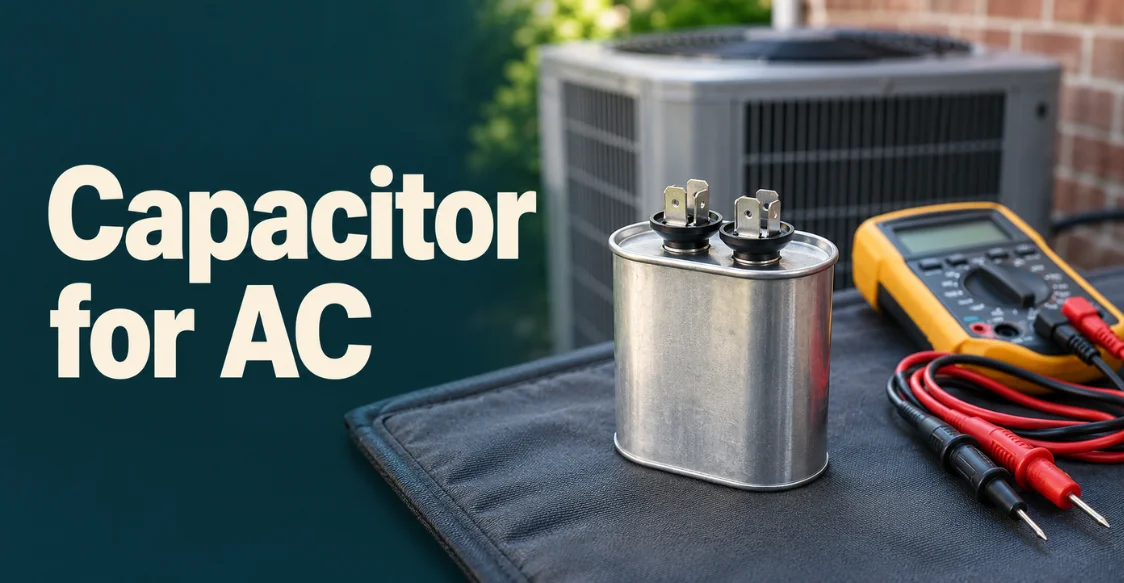
A capacitor for AC equipment helps the compressor and fan motors start and operate correctly. A weak unit can cause humming, poor cooling, hard starting, or repeated shutdowns. Choosing the correct replacement requires matching its electrical ratings instead of buying by appearance.
Quick answer: An air conditioner capacitor stores electrical energy and provides the torque AC motors need to start. A replacement should match the required microfarad rating and terminal configuration. Its voltage rating should equal or exceed the specified rating. Because stored electrical energy can remain after power is disconnected, professional replacement is usually safest.
| Key point | What U.S. homeowners should know |
|---|---|
| Main purpose | Helps compressor and fan motors start and run |
| Common types | Start, run, and dual-run. |
| Main rating | Microfarads, shown as µF or MFD |
| Common voltage ratings | 370 VAC and 440 VAC |
| Common failure signs | Humming, hard starting, warm air, or a stopped outdoor fan |
| Professional replacement cost | Often about $100–$400, depending on the system and local labor |
| DIY risk | Stored electrical energy can remain after power is disconnected. |
| Best replacement rule | Follow the equipment specifications and wiring diagram. |
Key Takeaways
- Match the required microfarad rating instead of choosing a similar-looking part.
- Never install a unit with a voltage rating below the required specification.
- A dual-run model usually serves both the compressor and condenser fan.
- Humming or poor cooling can suggest failure, but other causes can produce those symptoms.
- A swollen or leaking case is a strong warning sign.
- Electrical testing and replacement are safer when performed by a qualified HVAC technician.
What Does an Air Conditioner Capacitor Do?
Most residential central air systems use single-phase electric motors. These motors need help creating enough starting torque for normal operation. The electrical component provides that assistance through controlled energy storage and phase shifting.
The compressor has an especially demanding startup load. The condenser fan motor also depends on the correct electrical conditions. A weakened component can leave either motor struggling, overheating, or failing to start.
A failed part does not automatically mean the compressor has failed. That distinction matters because compressor repairs cost much more. HausFixr’s AC condenser guide explains how several outdoor-unit problems can produce similar symptoms.
Start, Run, and Dual-Run Capacitors Explained
A start capacitor provides a strong electrical boost for a short period. It helps a motor overcome starting resistance. A relay or other control usually removes it from the circuit afterward. A run capacitor remains connected while its motor operates. It helps maintain the phase relationship required for efficient motor operation.
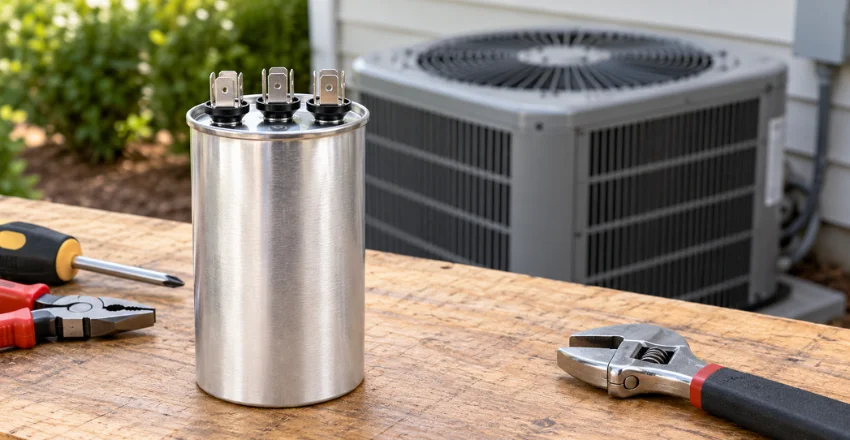
Central air conditioners commonly use these parts for compressor or fan motors. A dual-run capacitor combines two functions inside one metal case. One section serves the compressor, while another serves the condenser fan. These units commonly have terminals marked C, FAN, and HERM.
| Type | Main job | Typical connection |
|---|---|---|
| Start | Provides high starting torque | Used briefly during startup |
| Run | Supports a motor during operation | Remains in the circuit |
| Dual run | Supports compressor and fan | C, FAN, and HERM terminals |
The labels help technicians identify each connection. C means common, while FAN connects to the fan circuit. HERM normally identifies the hermetically sealed compressor circuit.
How to Choose a Capacitor for AC Equipment
Begin with the manufacturer’s equipment data and wiring diagram. The existing component can provide useful information, but it may have been replaced incorrectly before. Equipment specifications provide the stronger reference when both sources are available.
Match the Microfarad Rating
Capacitance appears in microfarads, shown as µF or sometimes MFD. A dual model may display a rating such as 45/5 µF. The larger number usually serves the compressor, while the smaller number serves the fan. Do not casually substitute another microfarad rating. Motors are designed around specific operating requirements. An incorrect value can affect starting, current draw, heat, and motor performance.
Check the Voltage Rating.
Residential HVAC parts often show 370 VAC or 440 VAC ratings. A replacement can generally have a higher voltage rating when other specifications match. It should not have a lower voltage rating than the equipment requires.
Voltage rating does not mean the component constantly receives that exact voltage. It describes the voltage level the part is designed to withstand. The Home Depot’s current replacement guidance uses the same equal-or-higher voltage rule.
Confirm the Terminal Configuration
A single-run model typically has two electrical connection groups. Dual-run versions normally have C, FAN, and HERM connections. Replacement wiring must follow the system’s proper diagram and specifications. Do not rely on wire color alone. Previous repairs may have changed wires or connections. A trained technician can document the original connections and verify the circuit before installation.
How to Read an AC Capacitor Label
Suppose a label reads 45/5 µF ± 6%, 440 VAC, and 50/60 Hz. Each marking provides the information you need for correct selection. Understanding those markings also helps you compare proposed replacement parts. The 45/5 figures describe two capacitance values in one dual-run unit. The tolerance indicates how much the measured capacitance may vary from its rated value.
The 440 VAC marking identifies its rated alternating-current voltage. The frequency marking indicates compatibility with the electrical supply. U.S. residential systems normally operate at 60 Hz. Technicians should still follow the equipment and component specifications rather than assuming compatibility.
Signs the Capacitor May Be Failing
A failing electrical part can create several noticeable symptoms. None proves the diagnosis without proper testing. The same symptoms can appear with contactor, motor, compressor, airflow, or power problems.
Common warning signs include:
- The outdoor unit hums but does not start.
- The condenser fan fails to spin normally.
- The compressor struggles to start.
- The system starts and stops unusually.
- Cooling performance drops.
- The outdoor cabinet makes a persistent electrical humming sound.
- The metal case appears swollen or bulged.
- Oil or residue appears around the component.
Warm air alone does not prove an electrical failure. First, check simple issues such as thermostat settings, filters, and blocked airflow. HausFixr’s AC running but not cooling guide covers those basic checks. Carrier also lists humming, reduced cooling, and frequent cycling among possible warning signs.
Those symptoms deserve diagnosis before parts are replaced. Guessing can waste money and leave the original problem unresolved.
How Technicians Test the Component
A technician first isolates the equipment from its electrical supply. The stored electrical charge must also be handled using proper safety procedures. Turning off the thermostat alone does not make electrical service safe. Testing commonly involves a multimeter with a capacitance function. Compare the measured µF value with the rated value and allowed tolerance.
A reading outside the specified range can support replacement. Visual condition also matters during diagnosis. Bulging, leaking, or heat damage can indicate a problem before detailed testing. Technicians may also inspect motors, terminals, wiring, and contactors for related damage.
How Much Does Replacement Cost in the U.S.?
Professional replacement typically falls between $100 and $400. HausFixr’s current condenser cost guide uses that range for capacitor replacement. Your actual invoice can vary by region, service timing, brand, accessibility, and diagnosis.
The component itself is only part of the service price. A technician also spends time diagnosing the failure and installing the correct replacement. Service-call charges and after-hours work can increase the total. A higher quote does not automatically mean the contractor is overcharging.
Difficult access or another failed component can change the job. Ask for an itemized estimate when the diagnosis includes several repairs.
Can You Replace One Yourself?
Replacing this component may appear mechanically simple. The electrical hazard makes the job different from changing a filter or thermostat battery. Stored energy can remain even after the equipment’s external power source is switched off.
Carrier recommends professional replacement because HVAC electrical components can retain dangerous voltage. Home Depot also classifies the work as an advanced repair. These warnings matter for homeowners without electrical training.
Opening the outdoor cabinet also exposes other high-voltage components. Wiring mistakes can damage motors or create a serious shock hazard. A qualified HVAC technician can verify the ratings, discharge stored energy, and reconnect the circuit correctly. You might also like Outdoor Fans for U.S. Patios.
Electrical problems may also extend beyond the cooling unit. Repeated breaker trips or signs of damaged service equipment deserve broader evaluation. HausFixr’s electrical panel upgrade guide explains warning signs that need professional electrical attention.
370 VAC vs. 440 VAC: Does the Difference Matter?
The voltage number is a maximum operating rating, not a capacitance value. A 440 VAC replacement can often replace a 370 VAC component when the required µF rating matches. The reverse substitution should not be made. A higher voltage rating does not increase the motor’s power.
It simply means the component can tolerate a higher voltage. Physical dimensions may differ, so you still need to consider mounting space. Capacitance remains the critical operating value to match. The terminal arrangement and application must also fit the equipment. Checking every specification prevents an apparently similar part from becoming the wrong replacement.
Why These Parts Fail
Heat is a major source of stress inside outdoor HVAC equipment. Summer operation can expose electrical components to high cabinet temperatures for long periods. Repeated heating and cooling gradually age internal materials. Voltage disturbances can also shorten service life.
Loose electrical connections or struggling motors may create extra stress elsewhere in the system. Normal manufacturing variation and age also affect a part’s lifespan. Regular cooling maintenance can identify weakening electrical parts before they fail completely. It cannot prevent every breakdown. It can still reveal declining capacitance or heat damage during a scheduled inspection.
Should You Replace the Capacitor or the Whole AC?
An isolated electrical-component failure rarely means you need to replace the entire cooling system. A relatively inexpensive repair may make sense when the compressor and fan motors remain healthy. System age, repair history, and overall condition still matter.
The decision changes when the system has several expensive problems. Compressor failure, refrigerant leaks, or repeated motor trouble can alter the economics. Older systems may also present compatibility issues when major equipment needs replacement.
Ask the technician to identify the failed component in writing. Request separate prices for the immediate repair and any recommended larger work. This makes it easier to compare repair costs with the system’s expected remaining life.
Frequently Asked Questions
What size capacitor for AC equipment do I need?
Use the capacitance specified by the equipment manufacturer or wiring documentation. The required value appears in µF or MFD and must match the intended motor. A dual-run unit requires both capacitance values to match the application.
Can I replace a 370 VAC unit with a 440 VAC version?
A 440 VAC part can generally replace a 370 VAC part when the required capacitance matches. The higher voltage rating provides greater voltage capability, not more motor power. Confirm physical size, terminals, frequency, and manufacturer requirements before installation.
How can I tell whether the part is bad?
Bulging, leaking, hard starting, and humming can indicate failure. A proper capacitance test provides stronger evidence than symptoms alone. Other electrical or mechanical problems can create the same warning signs.
Can a bad unit stop the AC from cooling?
Yes, a failed component can keep the compressor or condenser fan from operating correctly. The system may run partly while producing little or no cooling. Airflow, refrigerant, thermostat, and motor problems can produce similar results.
How long should an AC capacitor last?
Service life varies with temperature, electrical conditions, operating hours, and component quality. Current HVAC guidance typically places normal service life in a broad, multi-year range. Regular inspection matters more than replacing the part on a fixed calendar date.
The Practical Next Step
Start with the equipment label, wiring information, and a clear diagnosis before buying replacement parts. Match the capacitance, voltage capability, application, and terminal layout. Do not choose a component simply because its case looks similar.
If your outdoor unit hums, struggles to start, or stops cooling, switch the system off. Continuing to force a struggling motor can lead to additional damage. A qualified HVAC technician can test the electrical circuit and confirm whether this inexpensive part is the real problem.
For HausFixr readers, the smartest approach is to diagnose before replacing. Small electrical failures can imitate much more expensive HVAC problems. Confirming the cause first can protect both your equipment and your repair budget.