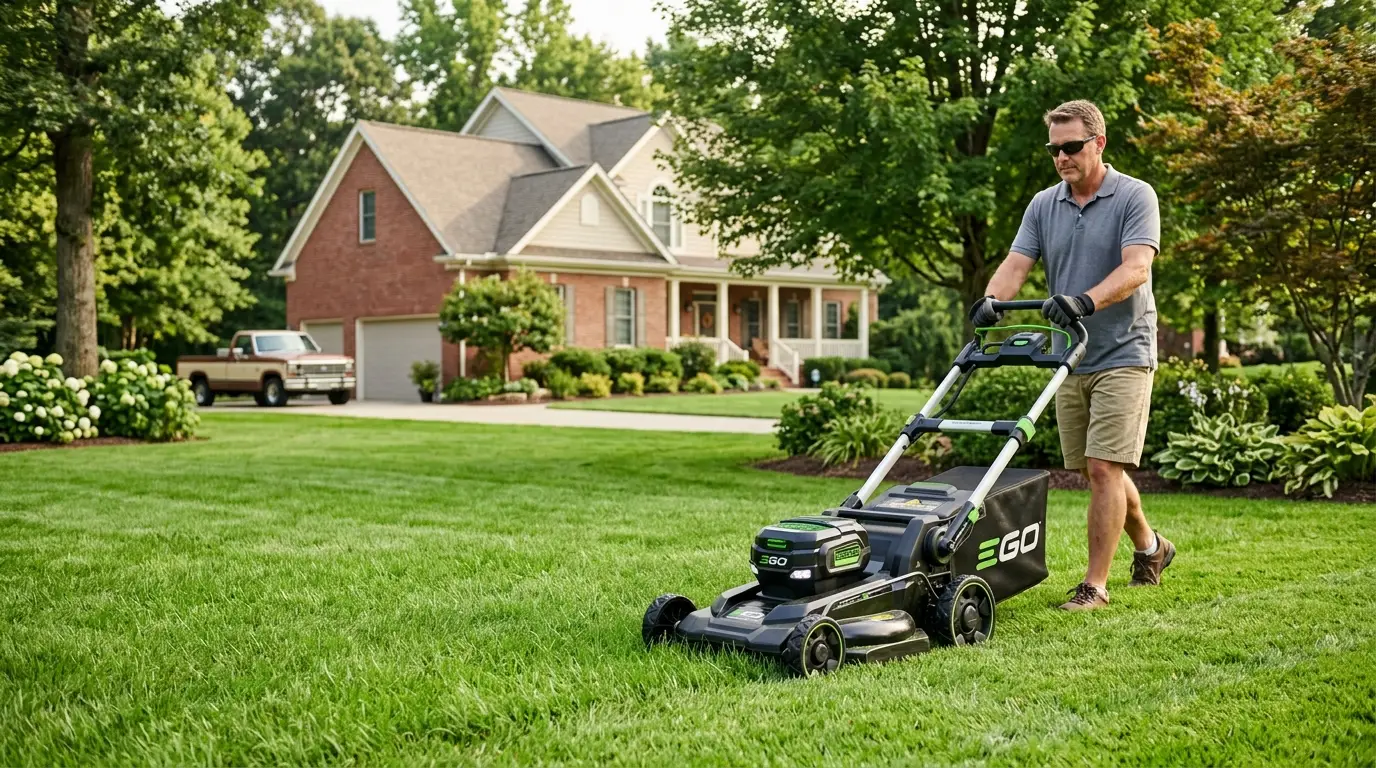
Buying a mower can cost under $100 or several thousand dollars. How much does lawn mower cost depends mainly on mower type, yard size, power source, and features. Most homeowners buying a walk-behind model can expect to spend roughly $150 to $650.
Riding and zero-turn machines require much larger budgets. Robot models also carry higher upfront prices than standard push equipment. Knowing the main price ranges makes comparing options much easier.
Quick answer: A typical U.S. push mower costs about $100 to $500. Battery and self-propelled models often cost more. Riding models commonly range from about $1,800 to $5,000, while zero-turn and robotic machines can cost several thousand dollars.
Lawn Mower Prices at a Glance
| Mower type | Typical U.S. price range | Good fit for |
|---|---|---|
| Manual reel mower | $60–$325 | Tiny, flat lawns |
| Corded electric mower | $75–$300 | Small yards near outlets |
| Battery walk-behind mower | $150–$650 | Small to medium lawns |
| Gas push mower | $125–$350 | General residential mowing |
| Self-propelled mower | $170–$1,600 | Slopes and larger walkable lawns |
| Riding mower | $1,250–$5,000+ | Larger properties |
| Zero-turn mower | $2,400–$7,900 | Large lawns needing faster mowing |
| Robot mower | About $700–$5,000+ | Automated lawn maintenance |
These ranges represent broad U.S. market pricing rather than guaranteed retail prices. Promotions, battery bundles, deck sizes, and premium features can change the final price. Retail prices also move throughout the mowing season.
How Much Does Lawn Mower Cost by Type?
The mower style usually has the biggest effect on price. A simple reel machine contains few expensive components. Riding and robotic equipment combines larger motors, batteries, electronics, or more complex drivetrains.
Your cheapest suitable option is not always the lowest-priced machine. Yard size and terrain can make an inexpensive model frustrating to use. Matching the equipment to the property can provide better long-term value.
Manual Reel Mowers: About $60 to $325
Reel models use rotating blades powered by the person pushing them. HomeGuide places this category around $60 to $325. Typical spending sits closer to $80 to $160.
They suit small, level lawns that receive frequent mowing. They need no gasoline, charging system, or engine maintenance. Thick growth and uneven ground can make them harder to operate.
Corded Electric Mowers: About $75 to $300
Corded models remain among the least expensive powered choices. Typical prices range from roughly $75 to $300. They avoid battery replacement and gasoline expenses.
The power cord limits where you can work comfortably. Trees, garden beds, and large lots can create handling problems. These machines make more sense for compact, uncomplicated yards.
Battery-Powered Mowers: About $150 to $650
Cordless electric models generally cost around $150 to $650. Premium self-propelled versions can climb considerably higher. Battery capacity and included battery packs strongly affect the purchase price.
A homeowner already using one battery-tool platform may save money. Compatible batteries can sometimes power several outdoor tools. Buyers should compare whether the advertised price includes batteries and a charger.
Gas Push Mowers: About $125 to $350
Basic gas-powered push models often fall between about $125 and $350. Larger engines and additional cutting features can increase that amount. Gas remains common where long runtime is more important than quiet operation.
Ownership costs continue after the purchase. Fuel, oil, filters, spark plugs, and seasonal service can add expenses. Proper storage also matters for dependable starting.
Self-Propelled Mowers: About $170 to $1,600
Self-propelled equipment uses engine or motor power to move its wheels. That feature reduces the effort needed on hills and larger lawns. Prices vary widely because both basic and premium machines use this design.
Gas versions commonly cost more than basic push machines. Premium battery versions can also become expensive once batteries are included. Buyers should compare drive systems alongside cutting width and runtime.
Riding Mower Costs for Larger Properties

A riding machine becomes attractive when walking the entire property takes too long. HomeGuide reports typical riding prices around $1,800 to $5,000. Rear-engine units may start lower, while premium tractors cost more.
Lawn tractors commonly provide wider decks and optional attachments. Those features may help properties needing hauling or other seasonal work. Paying more can make sense when the machine replaces several property-maintenance tools.
Storage deserves consideration before purchasing one. A riding machine needs considerably more protected space than a walk-behind unit. Trailer access can also matter when professional service becomes necessary.
How Much Do Zero-Turn Mowers Cost?
Residential zero-turn models generally start above ordinary lawn tractors. HomeGuide lists gas zero-turn prices around $2,400 to $7,900. Many commonly purchased machines fall around $3,000 to $5,000.
The main benefit is faster maneuvering around obstacles. Their turning ability helps around trees, beds, fences, and other lawn features. A large open property can also benefit from wider cutting decks.
Higher purchase prices do not automatically mean every homeowner needs one. Smaller suburban lots rarely require their speed or deck width. A quality walk-behind model can be more economical there.
What Does a Robotic Mower Cost in 2026?
Robot equipment has one of the widest price spreads. Recent 2026 market research places many current machines between roughly $700 and $3,500. Other cost guides show premium models reaching $5,000 or higher.
Navigation technology is a major price factor. Modern wire-free systems may use GPS, RTK, LiDAR, cameras, or several sensors together. Larger coverage areas and better slope capabilities generally increase prices.
A 2026 study of 21 U.S.-market robotic models reported a $1,699 median street price. Its measured range was $699 to $3,499. Buyers should still verify current retail pricing before ordering.
What Factors Change the Price?
Yard size changes the amount of cutting capacity you need. Small lawns can work with inexpensive equipment and narrow decks. Larger properties reward wider decks, longer runtimes, or riding platforms.
Power source also affects both initial and continuing costs. Gas requires fuel and engine maintenance. Battery equipment can require expensive replacement packs later.
Drive type matters for walk-behind machines. A basic push model depends entirely on your effort. Self-propelled systems cost more but reduce physical work on slopes.
Features can add hundreds or thousands of dollars. Common upgrades include electric starting, variable-speed drives, larger batteries, suspension, app control, and smart navigation. Buy features that solve a real property problem.
What Should You Spend for Your Yard Size?
For a small lawn below roughly one-quarter acre, a reel or basic electric option can be enough. Spending between about $100 and $400 covers many suitable choices. Paying for riding equipment rarely provides useful value on these properties.
For a typical suburban lawn, roughly $250 to $650 creates more options. That budget includes many battery and self-propelled machines. Runtime, terrain, and storage should guide the final choice.
Larger properties can justify $1,500 to $5,000 or more. Riding machines reduce the time required to cover substantial acreage. Zero-turn equipment may make sense where speed and maneuverability matter.
Yard layout matters alongside total acreage. Obstacles can make mowing harder than the property size suggests. HausFixr’s guidance on gravel walkway planning shows how paths and edging affect outdoor layouts.
Trees can create another practical mowing obstacle. Removing an old stump may protect blades and make more lawn accessible. HausFixr also explains professional stump grinding for residential yards.
Hardscape placement should also influence equipment selection. Narrow spaces beside patios may favor smaller cutting decks. See HausFixr’s brick paver guide for patios and driveways when planning connected outdoor areas.
New Versus Used: Which Costs Less?
Used equipment can reduce the upfront cost substantially. The savings matter most with riding and zero-turn machines. Mechanical condition matters more than the discount alone.
Ask for maintenance records when buying expensive used equipment. Check the deck, tires, belts, controls, and engine operation. Battery equipment also deserves a careful battery-health check.
A cheap machine needing major repairs can quickly erase the savings. Replacement transmissions, engines, batteries, and deck components may be expensive. Compare the repair risk against a new model’s warranty.
Remember the Ongoing Costs
Purchase price is only one part of ownership. Gas models need fuel and regular engine service. Electric models generally require less routine mechanical maintenance.
Blades need sharpening or replacement on every cutting system. Tires, belts, filters, batteries, and other components eventually wear out. HomeGuide estimates annual mower maintenance around $45 to $200, depending on the machine.
Robot owners face a different expense pattern. Replacement blades, batteries, electricity, and occasional accessories contribute to long-term costs. Installation can also add expense on systems needing perimeter wiring.
Is an Expensive Mower Worth Buying?
A higher price makes sense when it solves a recurring problem. Self-propulsion can help on slopes, while wider decks save time on larger lawns. Automation can benefit people who value weekly time savings.
More expensive does not always mean better for your property. Extra capacity may remain unused on a compact lawn. Complex technology can also create repair costs you would never face with basic equipment.
Start with your lawn’s size, slope, obstacles, and available storage. Then choose the least expensive category that handles those conditions comfortably. That approach prevents both underbuying and overspending.
How to Save Money When Buying
Shop by required capability rather than brand prestige alone. Compare deck width, runtime, drive type, warranty coverage, and included accessories. These details often reveal better value than the headline price.
Seasonal promotions can reduce equipment costs. Battery bundles may also provide better value when you need other outdoor tools. Always confirm what comes inside the package before comparing prices.
Avoid buying far more machine than your property requires. A simple walk-behind unit may serve a small yard for years. Spending several thousand dollars makes little sense without a matching workload.
Frequently Asked Questions
How much does lawn mower cost on average?
Walk-behind prices vary widely, but about $100 to $500 covers many common options. LawnLove reports an average walk-behind cost around $405. Riding equipment generally costs several times more.
What is the cheapest mower type?
Manual reel equipment is usually among the lowest-cost choices. HomeGuide reports prices starting around $60. It works best on small, flat, regularly maintained grass.
Is a battery mower more expensive than a gas mower?
Battery models can have higher upfront costs, especially with large batteries. Basic gas models may start lower. Long-term expenses differ because gasoline engines need fuel and more routine servicing.
How much is a riding mower?
Typical residential riding equipment costs roughly $1,800 to $5,000. Some rear-engine models can start lower. Commercial machines can cost far more than residential equipment.
How much should I spend on a mower?
Spend enough to comfortably handle your lawn size and terrain. Many suburban homeowners can find capable equipment between $250 and $650. Larger properties may justify riding or zero-turn machines costing several thousand dollars.
Is a robot mower worth the higher price?
It can be worthwhile when reducing weekly mowing time is valuable. Property shape, slopes, navigation requirements, and lawn size affect the decision. Current models can range from several hundred dollars to several thousand.
The Bottom Line
Mower prices vary because homeowners need very different levels of equipment. Small yards may need only a $100 to $300 solution. Typical walk-behind buyers often spend several hundred dollars instead.
Large properties change the calculation quickly. Riding, zero-turn, and robotic equipment can push the budget into thousands. Features and property size should decide whether that extra expense provides useful value.
Set your budget after measuring the property and identifying difficult terrain. Compare total ownership costs instead of purchase price alone. You will have a better chance of buying enough machine without paying for capacity you never use.