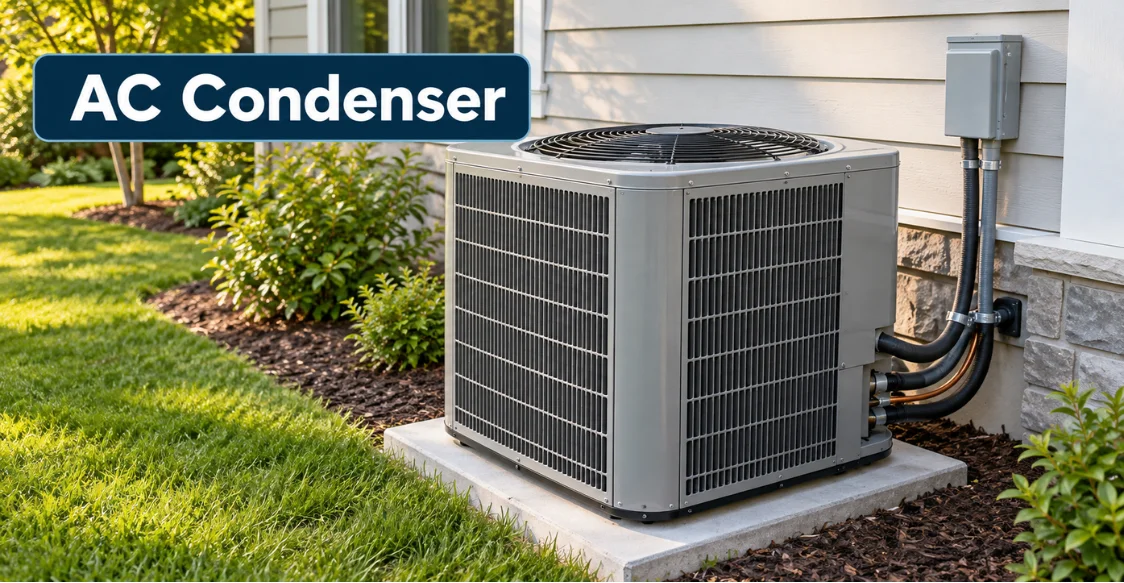
An AC condenser is the outdoor part of a central cooling system that releases heat from your home. It works with the indoor coil, refrigerant, compressor, and fan to complete the cooling cycle. When this outdoor unit struggles, comfort drops and repair costs can rise quickly. There is more on this in AC Running but Not Cooling.
Quick answer: The outdoor condensing unit takes heat carried by refrigerant and releases that heat into the outside air. Common problems include dirty coils, failed electrical parts, fan issues, leaks, or compressor trouble. In 2026, repair decisions also depend on equipment age, warranty coverage, refrigerant type, and system compatibility. Elsewhere on the site: Capacitor for AC.
| Homeowner question | Practical answer |
|---|---|
| What does it do? | Releases indoor heat outdoors so refrigerant can continue the cooling cycle |
| Where is it? | Usually in the large outdoor cabinet beside or behind the home |
| Typical lifespan | Often about 15 to 20 years with suitable maintenance |
| Common problems | Dirty coils, failed capacitors, fan motors, contactors, leaks, and compressor failure |
| 2026 replacement range | Roughly $1,200 to $6,100 in current national cost guides |
| Best first step | Diagnose the failed component before approving full replacement. |
Key Takeaways
- The outdoor unit does not create cold air. It removes heat from the refrigerant and rejects that heat outside.
- A dirty coil or failed capacitor can cause symptoms that look like a larger equipment failure.
- Current U.S. replacement estimates vary because tonnage, efficiency, labor, access, and compatibility affect pricing.
- Older systems deserve a compatibility check before a major repair, especially when refrigerant platforms differ.
- Refrigerant work should be handled by a properly certified HVAC technician.
What Is the Outdoor Condensing Unit?
A central air conditioner moves heat rather than producing cold air from nothing. The indoor evaporator absorbs heat, while the outdoor equipment releases it outside. Carrier describes this outdoor cabinet as the part that releases heat from the cooling cycle.
Several important components sit inside the cabinet. These usually include the compressor, condenser coil, fan, fan motor, capacitor, and electrical controls. A failure in one part can reduce cooling without requiring a full cabinet replacement.
How an AC Condenser Works
Hot, high-pressure refrigerant enters the outdoor coil after leaving the compressor. Outdoor air moves across the metal fins and carries heat away from the refrigerant. As it loses heat, the refrigerant changes toward a liquid state before returning indoors.
That heat-transfer process depends heavily on airflow. Grass clippings, cottonwood, dirt, leaves, and bent fins can reduce how easily heat escapes. The system may then run longer, use more electricity, and place extra stress on major components.
The indoor and outdoor sections must also work as one matched system. Capacity, refrigerant, metering devices, coils, and efficiency ratings all affect system performance. Replacing one major section without checking compatibility can create expensive problems.
Signs the Outdoor Unit May Be Failing
Poor cooling is the most obvious warning, but it does not prove the outdoor unit has failed. A dirty filter, duct problem, thermostat issue, or indoor coil problem can create similar symptoms. A technician should diagnose the full system before recommending a major replacement.
These warning signs deserve a service call. One sign alone may not identify the fault. Several together make professional diagnosis more urgent. Check for these symptoms:
- The home stays warm even though the system runs for long periods.
- The outdoor fan does not start, stops unexpectedly, or turns slowly.
- The cabinet makes repeated buzzing, rattling, grinding, or clicking noises.
- The system shuts off on a breaker or struggles to restart.
- Cooling performance has dropped while energy use has increased.
- Ice appears on refrigerant lines, or the system shows signs of a leak.
- The unit needs repeated repairs during the same cooling season.
Angi lists poor cooling, refrigerant leaks, unusual sounds, and electrical trouble among common warning signs. Those symptoms can come from several components, so visual clues alone are not enough. Refrigerant leaks and electrical faults need professional diagnosis.
2026 Repair and Replacement Costs
National pricing sources show a wide range because projects differ by size and location. Angi reports full replacement from about $1,300 to $6,100, with an average near $2,900. This Old House reports a broad range of about $1,200 to $4,200.
| Repair or replacement | Current planning range |
|---|---|
| Capacitor replacement | About $100 to $400 |
| Fan motor replacement | About $200 to $700 |
| Compressor work | About $800 to $2,500 |
| Condenser coil replacement | About $800 to $3,000 |
| Full outdoor unit replacement | About $1,200 to $6,100 |
These figures are planning numbers, not guaranteed contractor prices. Local labor, tonnage, efficiency, brand, access, permits, and refrigerant needs can change the total. Ask for an itemized written estimate before comparing companies.
A cheaper repair can make sense when the failure is isolated. Capacitors, contactors, and fan motors often cost far less than replacing major equipment. A failed compressor or leaking coil makes the decision harder, especially on an older system.
Repair or Replace: How to Make the Decision
Start with equipment age and the exact failed part. A small repair on a younger system differs from a major failure on a fifteen-year-old unit. Warranty coverage can also change the economics because parts may be covered while labor remains your responsibility.
Next, compare the repair price with the cost of a compatible replacement. Repeated breakdowns matter because several small repairs can add up to a large annual expense. Ask the contractor to explain expected remaining life, not only today’s invoice.
Efficiency and comfort should also enter the decision. An old system may run, yet still struggle with humidity or high summer bills. HausFixr’s guide to vinyl siding and energy efficiency shows why the building envelope also affects cooling demand.
Home protection plans can affect out-of-pocket costs for some covered failures. HausFixr’s Pivotal Home Solutions review explains why coverage limits, exclusions, and service rules matter. Read the actual contract before assuming an outdoor-unit failure qualifies.
Why Refrigerant Compatibility Matters in 2026
U.S. rules now restrict higher-global-warming-potential refrigerants in new residential and light-commercial equipment. EPA rules set a 700 GWP limit for many new systems, changing the equipment market from 2025. New products increasingly use lower-GWP refrigerants such as R-32 or R-454B.
That transition does not mean every older air conditioner must be replaced immediately. Existing equipment can still require service, parts, and approved refrigerant handling. The practical issue is whether replacement equipment can match the existing indoor system safely and correctly.
Do not assume a new cabinet can connect to an older indoor coil. Refrigerant type, pressure, controls, metering, safety requirements, and manufacturer matching all matter. Carrier recommends matched indoor and outdoor equipment when compatibility or warranty concerns make partial replacement unsuitable.
EPA Section 608 rules require certification for technicians who service equipment in ways that can release regulated refrigerants. This includes attaching gauges, adding refrigerant, removing refrigerant, or opening the refrigerant circuit. Homeowners should leave those tasks to qualified professionals.
Maintenance That Helps the Outdoor Unit Work Properly
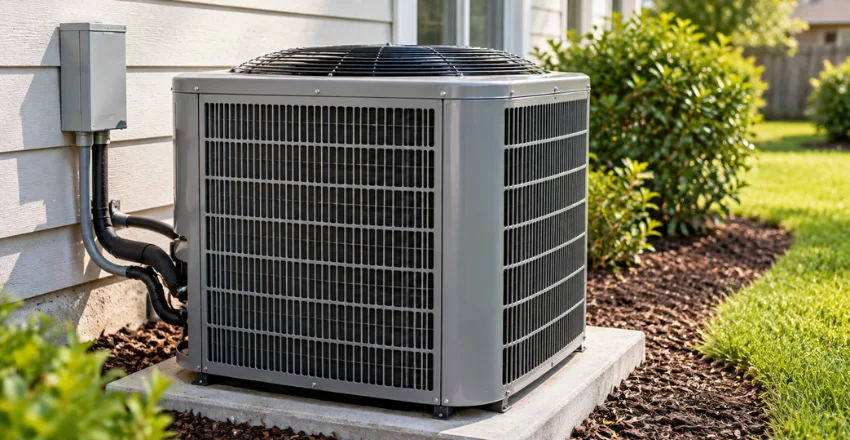
Good maintenance focuses on clean airflow and early problem detection. Keep vegetation, leaves, mulch, and stored items from crowding the cabinet. Follow the equipment maker’s clearance instructions because models can differ. Check the visible coil surface for dirt or debris before peak cooling season. Do not bend fins, damage wiring, or spray electrical parts.
If cleaning requires disassembly, refrigerant work, or electrical testing, schedule professional service. A yearly cooling inspection can identify weak capacitors, worn contactors, fan problems, dirty coils, and abnormal readings. It cannot guarantee against failure, but it can catch developing problems earlier. Better maintenance also gives you useful information when you need to make repair decisions.
Whole-home efficiency matters too. Better insulation, air sealing, efficient windows, and sensible thermostat settings reduce cooling load. HausFixr’s home-builder guide to energy-efficient features discusses improvements that can support lower heating and cooling demand.
What to Ask Before Approving a Major Quote
A strong estimate should explain the failed part and the proposed solution. It should separate equipment, labor, refrigerant, permits, disposal, and optional upgrades. Clear line items make competing quotes easier to compare.
Before approving major work, ask specific questions. Write the answers on the estimate. That makes quote comparisons easier. Use these questions:
- What test confirms the failed component?
- Is the part covered by a manufacturer or labor warranty?
- What refrigerant does the current system use?
- Will the proposed equipment match the indoor coil and controls?
- Does the quote include refrigerant recovery, charging, permits, and disposal?
- What efficiency rating applies to the complete matched system?
- What parts and labor warranties come with the repair or replacement?
- Would another major failure make full system replacement more economical?
Get more than one quote for expensive work when cooling conditions allow it. Give each contractor the same system information and request the same scope. Compare what each price includes, not only the final number.
A Practical Next Step
Start with diagnosis before deciding between repair and replacement. Ask the technician to name the failed component, document compatibility, and provide an itemized quote. For expensive work, compare multiple written estimates before committing.
Frequently Asked Questions
How long does an AC condenser last?
Many residential outdoor units can last about 15 to 20 years with suitable maintenance. Climate, salt exposure, run time, installation quality, and maintenance can shorten that range. Carrier gives a similar 15-to-20-year estimate for maintained equipment.
Is the compressor the same as the outdoor unit?
No, the compressor is one major component inside the outdoor cabinet. It pressurizes refrigerant so the cooling cycle can move heat effectively. Compressor failure can be expensive because the part and labor are both substantial.
Can I replace only the outdoor unit?
Sometimes, but you must verify compatibility first. The indoor coil, refrigerant, metering equipment, capacity, controls, and efficiency certification can affect a partial replacement. Ask the contractor to identify the matched equipment numbers in writing.
Can I clean the outdoor coil myself?
Homeowners can remove loose leaves and obvious debris around accessible equipment after safely shutting off power. Aggressive washing, cabinet disassembly, electrical work, and refrigerant service create added risk. Follow the manufacturer’s maintenance instructions or hire a qualified technician.