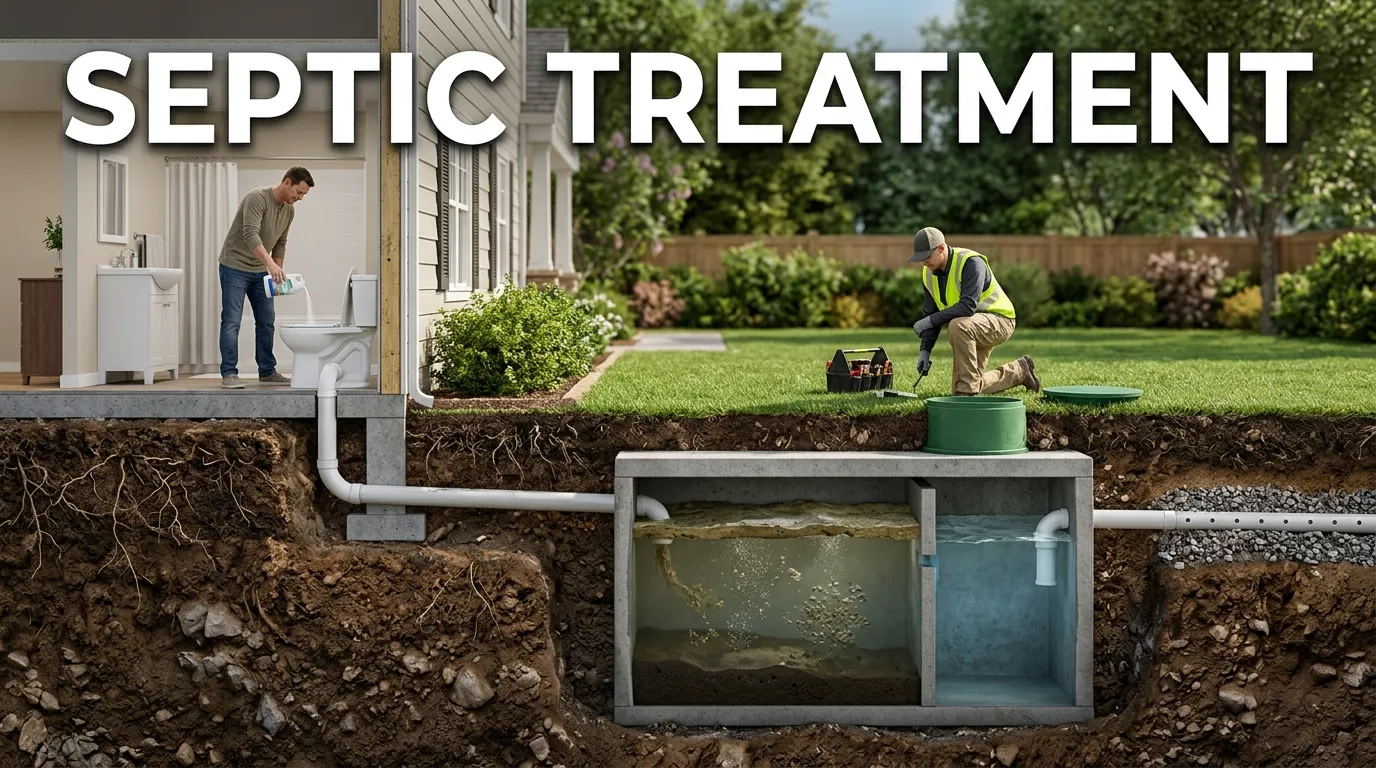
Septic treatment products promise easier maintenance, better digestion, or fewer system problems. Yet routine additives are usually unnecessary for a healthy household system. The U.S. Environmental Protection Agency says additives do not replace regular inspection, pumping, and proper waste disposal.
Direct answer: Most household septic systems do not need bacterial, enzyme, or chemical additives. EPA guidance says a functioning tank already contains microorganisms that process household wastewater. Homeowners should focus on regular inspections, pumping when needed, careful water use, and keeping damaging materials out of toilets and drains.
Septic System Care at a Glance
| Maintenance question | Practical U.S. guidance |
|---|---|
| Are routine additives needed? | EPA generally does not recommend them for domestic wastewater systems. |
| Typical inspection interval | About every 1 to 3 years for conventional household systems. |
| Typical pumping interval | Commonly every 3 to 5 years, depending on system and household conditions. |
| Do additives replace pumping? | No. Solids still accumulate and must be removed. |
| What should toilets receive? | Human waste and toilet paper. |
| What needs professional attention? | Backups, sewage odors, standing water, slow drainage, or suspected system failure. |
EPA recommends inspecting conventional household systems every one to three years. Household tanks are typically pumped every three to five years. Actual timing depends on tank size, household size, wastewater volume, and accumulated solids.
Key Takeaways
- A healthy household tank already contains naturally occurring microorganisms.
- Bacterial and enzyme additives are generally unnecessary for routine operation.
- Certain chemical additives may damage the system, soil, or groundwater.
- No additive removes the need to pump accumulated sludge and scum.
- Pumping commonly occurs every three to five years, but individual schedules differ.
- Toilets should receive only human waste and toilet paper.
- System problems deserve diagnosis rather than repeated doses of treatment products.
What Does Septic Treatment Mean?
The term can describe additives sold for use in a septic tank. These products may contain bacteria, enzymes, chemicals, or combinations of several ingredients. Marketing often focuses on waste digestion, odor control, sludge reduction, or system maintenance.
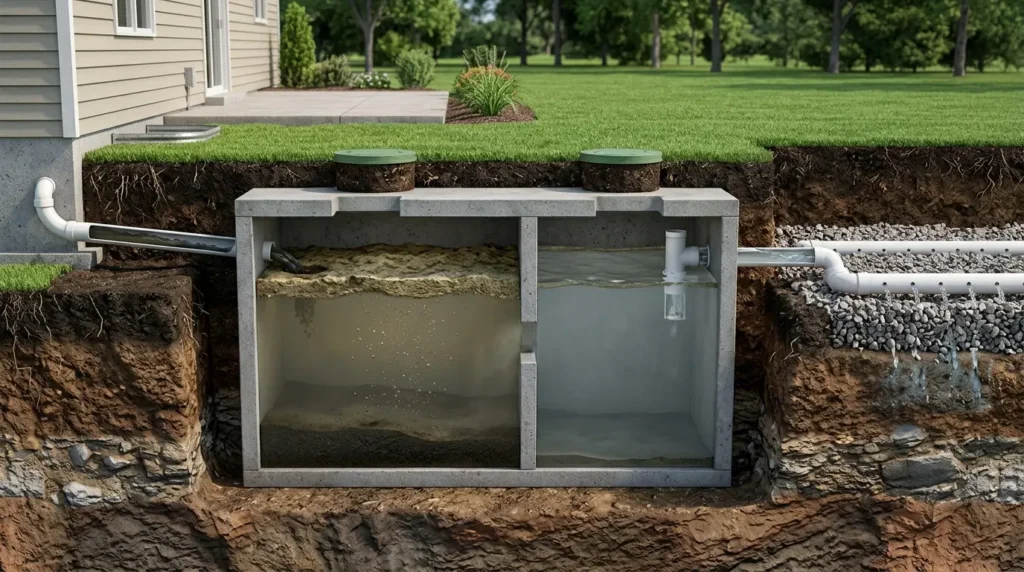
That description should not be confused with wastewater treatment inside the system itself. A conventional tank naturally separates solids, scum, and liquid wastewater. Microorganisms already in the system help break down some of the organic material.
Much of the remaining solid material does not disappear. Sludge and scum accumulate as the system operates. Periodic pumping physically removes those materials before they can threaten downstream components.
Septic Treatment Additives: Bacteria, Enzymes, and Chemicals
Additives fall into several broad groups, and they should not be treated as equivalent. Their ingredients and intended purposes can differ greatly. EPA guidance still emphasizes that routine additives are generally unnecessary in domestic wastewater systems.
Bacterial Additives
Bacterial products introduce additional microorganisms into the wastewater system. Manufacturers may market them for digesting organic waste or for routine maintenance. Products from brands such as Green Gobbler and BIO-CLEAN are examples of commercially sold biological treatments.
Their availability does not establish that a normally functioning tank needs extra bacteria. EPA notes that household systems already contain significant populations of bacteria and other microorganisms. Virginia Cooperative Extension also states that a properly working system should not require additional bacteria.
A bacterial product should never become a reason to postpone pumping. Non-biodegradable material and partially decomposed solids continue to accumulate inside the tank. Those materials eventually need physical removal regardless of product use.
Enzyme Additives
Enzyme products are marketed to help break down organic materials such as fats or proteins. Some commercial formulations combine enzymes with bacteria instead of selling either category alone. BIO-CLEAN, for example, lists bacteria plus amylase, cellulase, lipase, and protease in its product information.
Independent guidance does not establish a routine need for these products in healthy household systems. EPA says commercially available microbiological and enzyme additives are unnecessary for proper domestic wastewater treatment. The agency also cautions that additives may sometimes reduce drainfield performance.
Breaking material into smaller pieces does not necessarily remove it from the system. Suspended material may travel farther toward the drainfield instead. That distinction matters when evaluating claims based only on visible sludge reduction.
Chemical Additives
Chemical treatments deserve greater caution because their effects depend heavily on their ingredients. EPA specifically advises against additives containing organic solvents or strong alkali chemicals. These substances may threaten soil structure or groundwater quality.
Some harsh products can also interfere with the biological processes occurring in the tank. University of Georgia guidance warns that solvents may keep small solids suspended. Those particles can then move toward the drainfield and potentially contribute to clogging.
Acidic materials can also pose a risk to certain system components. UGA notes that acids may corrode concrete tanks and distribution boxes. Homeowners should avoid treating a septic system like a clogged household drain.
What Does the Evidence Say About Septic Additives?
EPA’s position is clear for ordinary domestic systems. Routine bacterial or chemical additives are not recommended because functioning systems already contain the organisms needed for wastewater treatment. EPA also says commercial microbiological and enzyme products are unnecessary for proper operation.
Penn State Extension reaches a similar conclusion about routine decomposition. Its septic pumping guidance states that biological and chemical additives aren’t needed to speed up that process. Solids continue building up despite natural biological activity inside the tank.
That does not mean every product has identical ingredients or effects. It means homeowners should not assume an additive provides a proven maintenance benefit. Product advertising should not override official guidance, local regulations, or professional inspection findings.
Additives Cannot Replace Septic Tank Pumping
Pumping addresses what a bottle or packet cannot. It removes accumulated sludge, scum, and other solids from the tank. Leaving too much material inside can shorten wastewater retention time and send solids toward the absorption area.
EPA says household tanks are generally pumped every three to five years. Inspection is commonly recommended every one to three years. Alternative systems with mechanical or electrical components may need more frequent service.
A fixed calendar cannot account for every house. Larger households, smaller tanks, higher wastewater volumes, and greater solids accumulation can change the schedule. Garbage disposal use may also increase the solids entering a system.
When Should a Septic Tank Be Pumped?
Think of three to five years as a common reference range, not a guaranteed deadline. EPA recommends letting system conditions and professional inspections guide actual service timing. Local health departments may also impose different inspection or maintenance requirements.
Penn State provides a more conservative two-to-three-year recommendation in its regional homeowner guidance. That difference shows why local conditions and system design matter. Homeowners should follow local rules when they are stricter than broad national guidance.
Keep records after every inspection and pumping visit. Note the date, tank condition, measured solids, repairs, and recommended next service. A documented history is more useful than guessing when maintenance is due.
What Not to Flush or Pour Into a Septic System
The toilet should handle human waste and toilet paper. Many common bathroom and household items don’t break down properly. They can create clogs, increase solids, or interfere with treatment processes.
Avoid flushing:
- Wipes, including products marketed as flushable
- Paper towels and facial tissues
- Feminine hygiene products
- Condoms
- Diapers
- Cotton swabs
- Dental floss
- Cigarette butts
- Cat litter
- Coffee grounds
- Grease, fats, and cooking oils
Household chemicals also require care. Do not pour gasoline, pesticides, antifreeze, paints, paint thinners, or large amounts of harsh chemicals down household drains. EPA warns that these materials can disrupt treatment or contaminate groundwater and surface water.
Garbage disposals deserve attention because ground food still enters the wastewater system. EPA says disposal use can increase solids and affect pumping frequency. Throwing food waste in the trash or compost can reduce that additional load.
Everyday Habits That Matter More Than Additives
Use water efficiently and avoid sending unusually large volumes through the system at once. Spreading laundry across the week can reduce sudden hydraulic loading. Repair leaking toilets and faucets because every unnecessary gallon eventually reaches the wastewater system.
Other plumbing problems can also increase unwanted water or complicate diagnosis. Hausfixr’s guide to slab leak repair costs explains signs of hidden plumbing leakage. Fix supply-side leaks rather than letting extra water continue entering household drains.
Bathroom renovations should account for drainage before new fixtures are installed. Hausfixr’s wet room bathroom guide covers drainage and plumbing planning during remodeling. Changes inside the house should still respect the capacity and condition of the onsite system.
Water treatment equipment can introduce another wastewater stream. Review discharge requirements before changing how regeneration water enters the household drainage system. Hausfixr’s water softener installation cost guide explains common installation and drain-connection considerations.
Warning Signs That Need Professional Attention
An additive is not a suitable response to obvious system failure. EPA lists sewage backups, slow drains, gurgling plumbing, sewage odors, and wet drainfield areas as warning signs. Unusually green or spongy grass over the drainfield can also indicate trouble.
Call a qualified septic professional when you see those symptoms. A diagnosis may reveal an overfull tank, a blocked component, hydraulic overload, a damaged pipe, or a drainfield problem. Adding more bacteria or enzymes cannot identify the cause.
Never enter a septic tank yourself. Tanks can contain dangerous gases and oxygen-deficient conditions. Penn State warns homeowners never to enter one for any reason.
How to Approach Commercial Septic Products
Start with the ingredient category, not the advertising promise. Determine whether a product contains bacteria, enzymes, solvents, strong alkalis, acids, or other active ingredients. Then compare the label with guidance from your local health department and system manufacturer.
Brands such as Green Gobbler and BIO-CLEAN are examples of products marketed for septic applications. Their mention here is not an endorsement or an efficacy finding. EPA does not recommend individual commercial septic products.
Be especially skeptical of any claim that routine additive use eliminates pumping. Physical solids still build up inside household tanks. Regular inspection remains the safer way to determine actual maintenance needs.
Frequently Asked Questions
Does septic treatment eliminate the need to pump the tank?
No. EPA says additives do not replace normal septic system maintenance. Pumping removes solids that biological activity does not eliminate.
Do I need to add bacteria after my septic tank is pumped?
EPA does not recommend routine bacterial additives for domestic wastewater systems. The system receives microorganisms naturally through normal household wastewater. A newly pumped tank usually does not need commercial bacteria to resume normal operation.
How often should a household septic tank be pumped?
EPA gives a general range of every three to five years. Tank size, household occupancy, water use, and solids accumulation can shorten or lengthen that interval. An inspection provides better guidance for a specific property.
Are enzyme septic additives safe?
Safety and system effects depend on the specific formulation. EPA says enzyme additives are generally unnecessary for proper domestic wastewater treatment. Check the label and local requirements before adding any product.
Can chemical septic treatments damage a system?
Certain chemicals may create problems. EPA advises against organic-solvent and strong-alkali additives because they can threaten soil structure or groundwater. UGA also warns that some chemical products can affect solids movement or concrete components.
The Better Maintenance Plan
Put routine maintenance ahead of additive use. Arrange inspections, pump accumulated solids when needed, conserve water, and protect the drainfield from excess loading. Those actions directly address the factors EPA identifies as central to system care.
Keep service records and learn where your tank and drainfield sit on the property. Contact your local health or environmental department when regulations are unclear. For symptoms of failure, use a licensed septic professional instead of experimenting with repeated treatments.