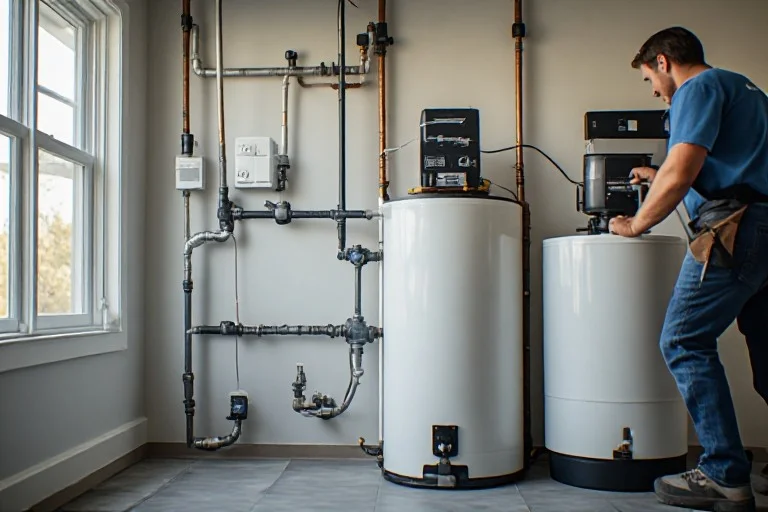
Most homeowners should budget around $1,500 for a professionally installed system in 2026. Published national ranges run from about $200 to $6,000, while unusually complex projects can cost more. The water softener installation cost depends on whether the equipment is included, how much plumbing must be modified, and whether electrical work or permits are required.
| Budget point | 2026 benchmark | What it means |
| National average for an installed project | About $1,500 | A useful starting budget, not a fixed quote |
| Common published range | $200–$6,000 | Type, capacity, location, and project complexity all matter |
| Basic installation benchmark | $1,131–$1,405 | Assumes favorable, readily serviceable site conditions |
| Possible DIY labor savings | $150–$1,000 | Savings depend on skill, local code, and project complexity |
| Typical professional installation time | A few hours | Additional plumbing work can extend the job |
Current national estimates vary because different cost guides use different assumptions. That is why one published number should never be treated as a guaranteed local price.
Short answer: Plan on about $1,500 for a typical installed project. A softener-ready home with a nearby drain and power source can cost less, while a retrofit can cost more. Ask whether the quoted total includes equipment, labor, fittings, permits, testing, programming, and removal of the old unit.
Water Softener Installation Cost in 2026: What the Number Includes
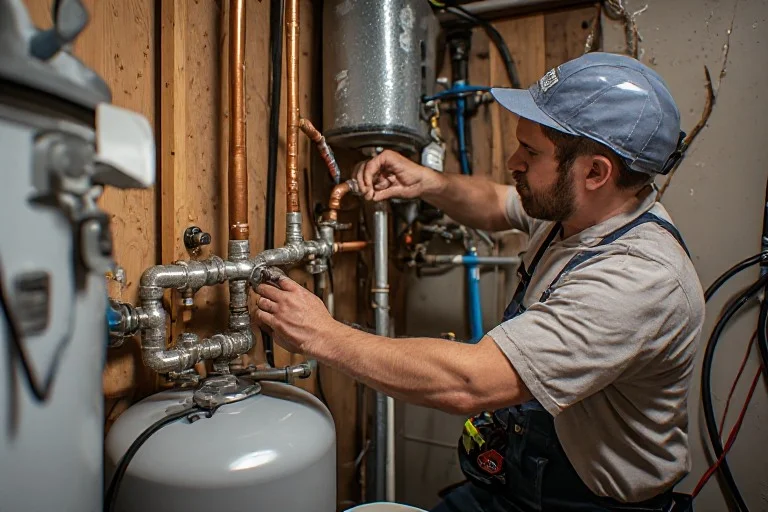
The biggest pricing problem is that “installation cost” does not always mean the same thing. Some national cost guides discuss the entire project, including the equipment. An installer, however, may quote labor and setup separately.
You should assume the equipment price is separate from installation unless the estimate clearly states otherwise. Labor, connectors, plumbing changes, inspections, and permits may appear as additional line items.
That explains why a $700 installation quote and a $1,500 online average may both be reasonable. They may simply be pricing different scopes of work.
What You Are Paying For
A professional installation can involve more than connecting two pipes. Your final estimate may include:
- The softening equipment and controls
- Labor for connecting the system to the main water line
- A bypass valve, connectors, fittings, and mounting materials
- A suitable drain connection for regeneration
- Electrical work if a usable power source is not nearby
- Water testing and initial programming
- Local permits or inspections
- Removal and disposal of an existing unit
A basic installation may include mounting the unit, connecting the supply and drain lines, using existing power and water sources, and verifying that the system operates correctly.
A house that needs new piping, electrical work, or a different installation location can move beyond that basic scope. Permits, plumbing modifications, and electrical work can also increase the total price.
If you are already dealing with questionable plumbing or unexplained water problems, address those separately. Hausfixr’s slab leak repair cost guide explains how quickly access, pipe work, and repair scope can change a plumbing estimate.
What Makes the Quote Go Up or Down?
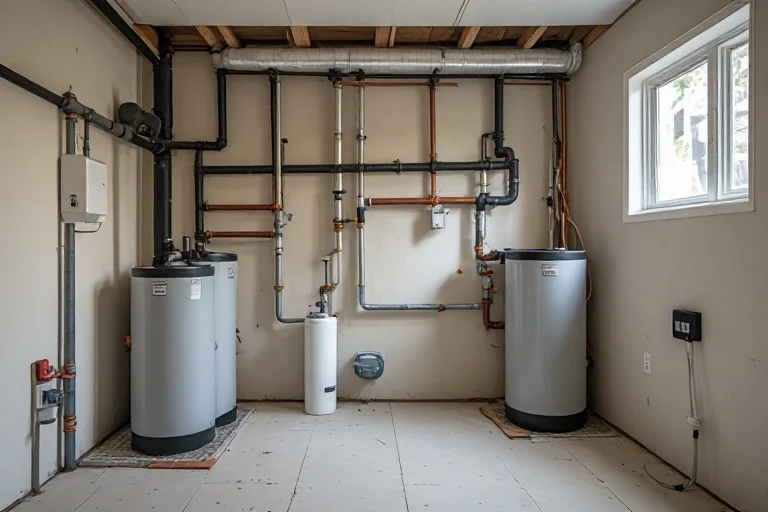
| Project factor | Usually easier on the budget | Usually adds work |
| Existing plumbing | Dedicated loop already present | Main line must be cut and rerouted |
| Installation location | Close to the main supply | Distant or difficult-to-access location |
| Drainage | Suitable drain nearby | New drain route required |
| Power | Existing appropriate outlet | Electrical work required |
| Project type | Simple replacement | First installation or major retrofit |
| Local rules | No special permit required | Permit, inspection, or licensed trade required |
| Equipment | Standard household capacity | Larger or more complex configuration |
These factors are why local quotes matter more than a national average. Plumbing layout, equipment requirements, labor, permits, and installation conditions can all affect the final price.
Is Your Home Softener-Ready?
Use this quick budgeting checklist before asking for estimates:
- Is there already a dedicated plumbing loop?
- Is a suitable drain connection close to the installation point?
- Is an appropriate electrical power source available nearby?
- Is there enough space to install and service the equipment?
- Will an existing unit need to be disconnected and hauled away?
- Have you checked local permit or licensed-plumber requirements?
This is not a contractor estimate. It is a simple way to identify the line items that deserve attention before a quote arrives. Drainage, plumbing configuration, parts, permits, and replacement work can all affect the scope of the project.
DIY vs. Professional Installation
DIY installation can reduce labor costs, especially when a house is already prepared for the equipment.
The risk comes from the scope of the work. The job can involve the main water supply line, drainage, electrical access, local code requirements, and equipment programming. Some areas may also require a licensed plumber, and installation mistakes can lead to leaks or warranty problems.
| Option | Main advantage | Main drawback |
| DIY | Can reduce labor costs | Greater plumbing, drainage, code, and warranty risks |
| Professional | Installation, setup, and code knowledge | Higher upfront cost |
A faucet replacement is a narrower plumbing project. If you want to compare the skill level required, see Hausfixr’s guides to changing a bathroom faucet and replacing a kitchen faucet.
Test Your Water Before Buying the Equipment

Paying for an oversized unit can waste money, while an undersized unit may not handle your household’s demand effectively. Test the incoming water before choosing a system capacity.
You should avoid installing softening equipment when your water hardness does not justify it. When replacing an existing system, demand-initiated regeneration can also be more efficient than regeneration based on a fixed schedule.
Water and salt efficiency should be part of the buying decision as well.
That makes water testing part of the purchasing process, not an optional extra after installation.
How to Compare Installer Quotes Without Missing Extra Charges
Get at least three itemized local estimates based on the same project scope. A cheap lump-sum quote is difficult to compare with a detailed estimate.
Ask each installer to state whether the price covers:
- Equipment and system capacity
- Labor and fittings
- Bypass and drain connections
- Any new plumbing or electrical work
- Permit and inspection fees
- Water testing and initial programming
- Removal of the old unit
- Labor and equipment warranties
If a line item is excluded, ask what circumstances would trigger an additional charge. Clarifying parts, additional plumbing, permit requirements, and removal costs before work begins can help you compare estimates more accurately.
Get a Local Price Before You Buy

Start with a water hardness test, then ask three local installers for the same itemized scope of work. Compare the equipment, plumbing changes, drain connection, electrical work, permits, setup, removal, and warranty instead of comparing only the headline price.
A detailed $1,800 estimate may cost less in the end than a $1,300 quote that leaves several required items outside the stated price.
Frequently Asked Questions
A reasonable national planning figure is about $1,500. Published estimates commonly place the total cost within a broad range of roughly $200 to $6,000. Complex whole-home projects can exceed that range.
Not necessarily. The equipment price may be separate from the installation charge unless your estimate specifically bundles both. Ask for an itemized total before comparing companies.
Many installations can be completed in a few hours. Homes that require additional plumbing work can take longer.
That depends on local rules. Permit requirements vary by jurisdiction, and some areas require a licensed plumbing professional for this type of work.
It can be worthwhile for an experienced homeowner with a prepared installation location and straightforward connections. Check local code and warranty requirements before deciding.