If your heating and cooling bills seem to rise every year, the problem might not always be the HVAC system. At times, the outside of the house is doing less than it should. Old siding can develop cracks, gaps, or loose panels that allow outside air to move in and conditioned air to escape. Those small changes are easy to ignore until the house starts feeling colder in winter or harder to cool in summer. That’s one reason many homeowners looking into vinyl siding in Iowa City, IA, also ask whether replacing their siding can make the home more energy efficient. In many cases, the answer is yes, especially when the existing siding has reached the end of its service life.
How Does Vinyl Siding Help Improve Energy Efficiency?
Keeping a comfortable indoor temperature isn’t only about insulation hidden inside the walls. The exterior of the home plays a role too, and siding is part of that system.
A. Reduces Air Leaks Around the Exterior
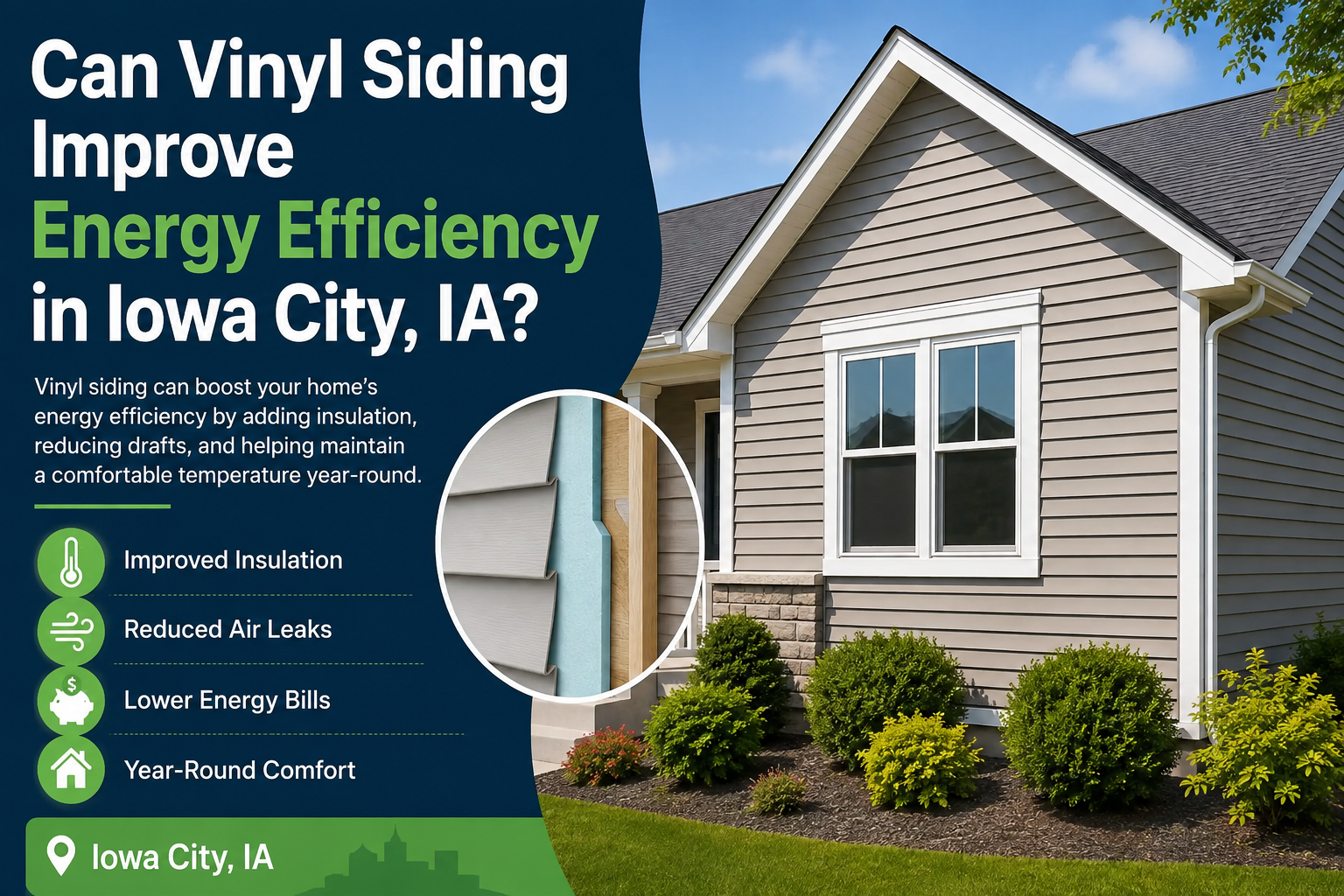
More often than not, concerns begin with loose edges, warped panels, or joints that no longer fit together properly. Those openings allow outside air to move through the wall assembly more easily than it should. Replacing worn siding creates a tighter exterior so that unwanted drafts do not find their way inside. Insulated siding generally add an R-Value of 2.0 to 4.0, which depicts its ability to reduce heat transfer and ensure better energy efficiency.
B. Works Alongside Existing Insulation
Vinyl siding doesn’t replace the insulation inside your walls, but it does help it do its job. By covering the exterior more effectively, it reduces the amount of heat moving in and out of the home. Some vinyl siding products come with insulated backing. These products give your walls another layer of protection against changing outdoor temperatures. For a closer look, see When Should You Reach Out to a Local Plumber?.
C. Helps Maintain More Consistent Indoor Temperatures
When less heated or cooled air escapes, it is easier to keep the whole house comfortable. Rooms are less likely to feel warmer or colder than the rest of the home, so you’re not constantly adjusting the thermostat. Over time, that can also mean less wear on your heating and cooling system.
What Other Advantages Come With Vinyl Siding?
Lower energy bills are only part of the story. For many homeowners, vinyl siding is just as appealing because it requires very little maintenance while standing up well to everyday weather.
A. Requires Less Maintenance
Keeping wood siding in good shape usually means repainting, scraping, or sealing it every few years. Vinyl siding does not demand much. Most of the time, a quick rinse with a hose or a simple wash is enough to remove dirt.
B. Handles Iowa’s Changing Weather Well
Living in Iowa means your home has to deal with a little bit of everything. Rain, snow, humid summers, and strong winds all put the exterior to work. Vinyl siding is built for those conditions. It won’t attract pests or rust, and when it’s installed properly, it continues protecting the home while maintaining its appearance for years.
C. Gives the Home an Updated Appearance
Replacing faded or damaged siding changes the look of a home almost immediately. Fresh siding creates a cleaner exterior and often makes the entire property appear better maintained. That’s something homeowners appreciate every day, and it can also leave a positive impression if the property is ever sold.
Conclusion
Improving energy efficiency doesn’t always require major changes inside the house. Sometimes the biggest difference starts on the outside. If your existing siding is worn, loose, or has started showing its age, replacing it may help improve comfort while reducing unnecessary energy loss. Investing in vinyl siding in Iowa City, IA, is a practical way to protect your home, improve its appearance, and support better performance throughout the year.