
Stucco siding is a cement-based exterior finish applied wet over masonry or a properly prepared framed wall. It can last for decades, resists fire and rot, and comes in many textures. Its main risks are cracking and hidden moisture, so flashing, drainage, wall preparation, and installer skill matter as much as the finish itself.
If you like the clean, solid appearance of stucco, the finish itself is only part of the decision. The wall beneath it, your climate, your repair expectations, and the quality of the installation determine whether it becomes a long-lasting exterior or an expensive problem.
| Question | What homeowners should know |
| What is it? | Portland cement plaster applied as an exterior wall finish |
| Typical lifespan | Often 50 years or more with proper installation and maintenance |
| Published installed-cost estimates | Roughly $6.50 to $15 per square foot, with significant regional and project-specific differences |
| Main strengths | Long service life, fire resistance, design flexibility, and a solid appearance |
| Main concerns | Cracking, moisture intrusion, and difficult color matching after repairs |
| Best application | A properly prepared wall with effective flashing and moisture management |
| DIY-friendly? | Small cosmetic repairs may be manageable, but full installation usually requires professional skill |
Published cost estimates vary considerably. Some homeowner cost guides list installed prices between $6.50 and $10 per square foot, while others report averages closer to $15 per square foot. Wall preparation, labor, location, and the condition of the existing exterior account for much of that difference.
Key Takeaways
- Stucco is a wall system, not merely a textured surface.
- Traditional mixes use cement, sand, lime, and water.
- A well-built exterior can remain serviceable for several decades.
- Small cracks deserve attention before water reaches the layers behind them.
- Wet or freezing climates make drainage and flashing especially important.
- Get bids that describe the complete wall assembly, not only the color and texture.
What Stucco Is and How the Wall System Works
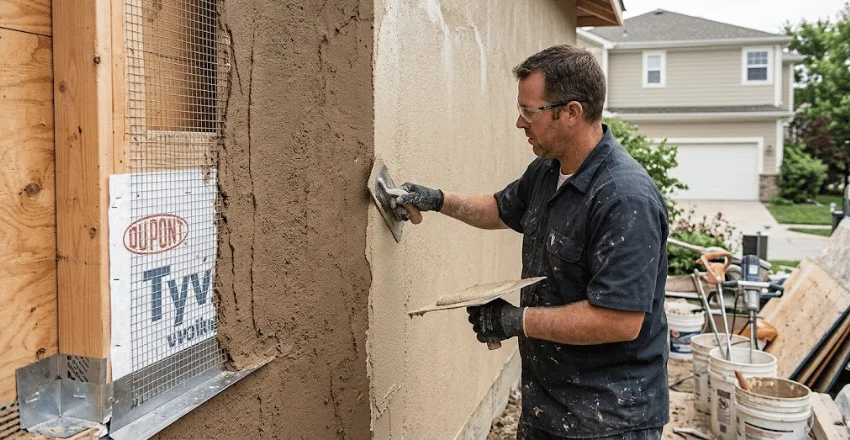
Stucco is the common name for Portland cement plaster used as an exterior finish. It forms a hard surface that resists rot, rust, and fire. Pigments and finishing techniques can also create a wide range of colors and textures.
Installation methods vary depending on the wall beneath the finish. Masonry can provide a stable base. A wood-framed wall requires more preparation, including a weather-resistant layer and lath before the plaster coats are applied.
That hidden work matters. HausFixr’s guide to professional siding installation also explains why flashing and the weather-resistive barrier are important parts of exterior wall performance.
Traditional three-coat installation generally includes a scratch coat, a brown coat, and a finish coat. Other approved systems may use fewer coats. The correct assembly depends on the substrate, product, local building code, and manufacturer requirements.
The Main Benefits and Drawbacks
Stucco offers a useful combination of durability and design flexibility, but it is not forgiving of poor installation or inadequate moisture control.
| Strength | Trade-off |
| Hard, long-lasting surface | Can crack when the structure moves |
| Fire-, rot-, and rust-resistant finish | Water can cause serious damage behind compromised areas |
| Many colors and textures | Patches can be difficult to match |
| Compatible with several architectural styles | Skilled installation can take time |
| Low routine maintenance when properly installed | Regular inspection is still necessary |
| Few visible seams across large wall areas | Repairs may be more involved than replacing a siding panel |
Its resistance to rot, rust, and fire makes stucco appealing for many homes. Cracking and moisture intrusion, however, are the two weaknesses homeowners need to monitor most closely.
What Stucco Siding Costs in 2026
There is no single national price that applies to every house. Current published estimates generally range from $6.50 to $15 per square foot installed, which is why a local written quote is more useful than relying on a single national average.
Five factors can change a quote quickly:
- removal of the existing exterior
- damaged sheathing or other wall repairs
- the number of stories and difficulty of access
- the type of approved stucco system
- texture, trim, architectural details, and local labor rates
Ask each contractor to separate the costs of preparation, wall-system materials, finish work, demolition, and repairs. Two estimates with the same total price may include very different levels of moisture protection.
Wall size and the chosen system can also affect the total project cost. Traditional cement plaster and synthetic EIFS should not be treated as interchangeable products when comparing bids.
Lifespan and the Maintenance That Protects It
A properly installed and maintained stucco exterior can often remain serviceable for 50 years or longer. Some systems may last much longer under favorable conditions.
Age alone does not tell you whether a wall is healthy. Water intrusion, structural movement, impact damage, failed flashing, and neglected cracks can shorten its useful life.
A simple inspection routine should look for:
- new or widening cracks
- staining below windows or roof intersections
- bulging, soft, or loose areas
- gaps around penetrations and trim
- persistent dampness or mold-like discoloration
- downspouts or sprinklers that repeatedly soak the wall
Routine maintenance should include checking cracks, cleaning the surface when needed, and directing gutters or sprinklers away from the exterior.
A small, isolated crack may need only a compatible repair product. A recurring crack, widespread staining, a bulging surface, or a soft area warrants professional investigation. Covering a moisture problem with paint or patching material can hide the symptom without correcting the cause.
Does Climate Make Stucco a Bad Choice?
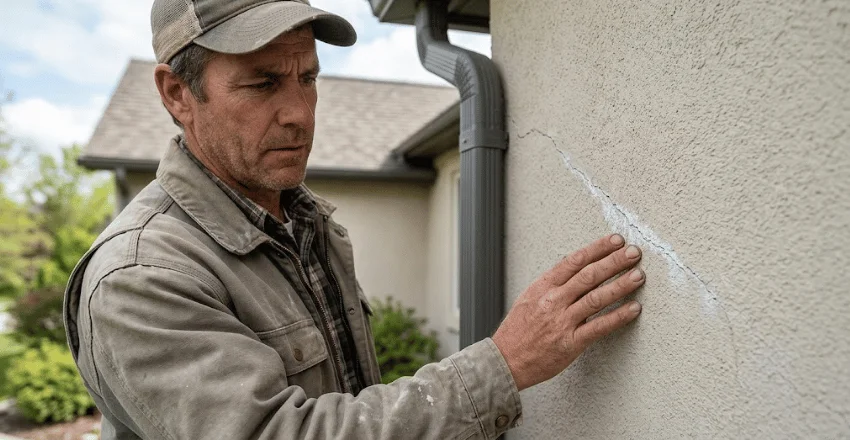
Climate affects how forgiving the exterior will be, but the answer is not as simple as saying that dry climates are good and wet climates are bad.
Dry regions expose the finish to less routine moisture. In rainy, humid, windy, or freeze-thaw climates, water management becomes more demanding. Flashing, drainage, the weather barrier, penetrations, and routine maintenance require closer attention.
A contractor should be able to explain how water that reaches the wall will drain safely. If the explanation focuses only on sealing the visible surface, ask for more detail about the layers behind it.
Cold climates add another concern. Water that enters a crack can expand when it freezes. Early crack repair and effective drainage are especially important in areas with frequent freeze-thaw cycles.
Stucco vs. Vinyl and Fiber Cement
The right choice depends on your budget, preferred appearance, climate, and maintenance expectations.
| Factor | Stucco | Vinyl | Fiber cement |
| Appearance | Solid, textured, seamless look | Manufactured panels | Boards, panels, or shingles |
| Upfront cost | Often higher because of labor | Usually lower | Usually moderate to high |
| Main upkeep | Crack and moisture inspections | Washing and damaged-panel checks | Joint, finish, and board inspections |
| Repairs | Patches may remain visible | Individual panels can often be replaced | Individual boards can often be replaced |
| Fire characteristics | Cement-based and fire-resistant | Varies by product | Cement-based and fire resistant |
| Main installation concern | Drainage, flashing, and cracking | Fastening and expansion | Fastening, joints, and clearances |
Vinyl usually has a lower upfront cost, while stucco often has a longer expected service life when installed and maintained correctly.
Energy performance should not be judged by the visible cladding alone. Insulation and the rest of the wall assembly also affect a home’s efficiency. HausFixr’s article on vinyl siding and energy efficiency explains how exterior products work alongside insulation rather than replacing it.
Repair or Replace? Look at the Damage Pattern

One crack does not automatically mean you need a new exterior. Look at the pattern of damage and what is happening around it.
| What you see | What it may indicate | Sensible next step |
| Isolated hairline crack | Minor movement or surface shrinkage | Monitor it and use a compatible repair product if appropriate |
| Crack that repeatedly returns | Ongoing structural movement | Have the wall and substrate assessed |
| Brown or dark staining | Possible water intrusion | Find the moisture source before refinishing |
| Bulging or loose section | Loss of bond or hidden deterioration | Arrange a professional inspection |
| Widespread damage on several walls | Aging system or broader installation problem | Compare sectional repairs with full replacement |
| Damage around windows or roof intersections | Possible flashing problem | Inspect the transition details first |
The most useful question is not simply, “Can this crack be patched?” It is, “Why did this area fail?” Correcting the cause before repairing the finish can prevent the same damage from returning.
What to Ask Before Signing a Contract
Do not choose an installer based on a texture sample alone. Ask each contractor to identify the complete wall assembly, including the weather barrier, flashing method, lath or approved base, coat system, control details, and proposed repair procedures.
Get two or three comparable written bids. Ask who will be responsible if any hidden wall damage is discovered after removal begins. HausFixr’s broader exterior home guides can also help you compare exterior materials and maintenance decisions.
A good installation should perform correctly both at the visible surface and within the hidden wall assembly. That distinction is what separates choosing a finish from choosing a complete exterior wall system.
Frequently Asked Questions
A properly installed system typically lasts 50 years or longer. Climate, structural movement, water exposure, maintenance, and repair history can all affect that lifespan.
No. The finish can resist weather, but it should not be treated as the wall’s only moisture barrier. Framed construction needs appropriate water-management layers and correctly detailed flashing behind and around the finish.
No. Traditional stucco is a cement-plaster system. EIFS is a distinct exterior system that typically incorporates insulation and synthetic materials. If an estimate refers to “synthetic stucco,” ask for the exact system and manufacturer before comparing prices.
Yes, but cracks and moisture problems should be corrected first. The coating must also be suitable for masonry and compatible with the existing finish. Paint should never be used to hide active water damage.
It can be a strong choice if you value a solid, textured appearance, long service life, and fire-resistant materials. It may be less attractive if your priority is the lowest possible initial cost or if qualified local installers are difficult to find.