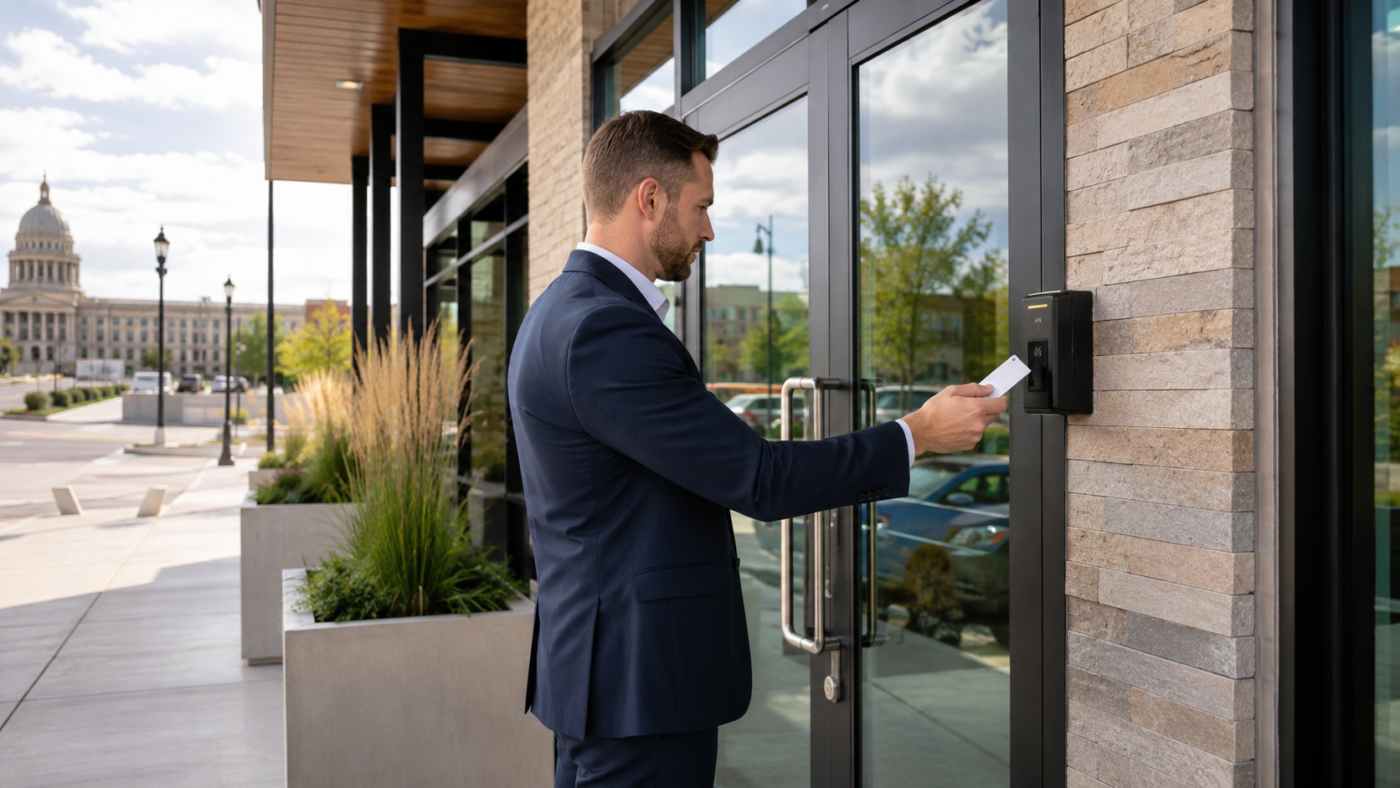
Controlling who can enter your property is an important part of modern security. Traditional keys can be lost, copied, or shared without your knowledge, making it difficult to maintain control over restricted areas. A modern access control solution gives property owners a more organized way to manage entry points while improving security and convenience.
For businesses, offices, schools, apartment buildings, warehouses, and other properties, an access control system in Bismarck, ND, can help create a structured approach to managing authorized entry. Instead of relying only on physical keys, you can use credentials such as access cards, key fobs, PINs, mobile credentials, NFC, Bluetooth, or other electronic methods. This makes it easier to determine who can enter specific areas and when access should be permitted.
Why Traditional Access Methods Can Create Problems
Keys are simple, but they can create security challenges as your property grows. Employees may leave with keys, contractors may need temporary access, and lost keys may require locks to be replaced. These situations can become difficult to manage when multiple doors or users are involved.
Access control addresses these challenges by allowing permissions to be managed electronically. If an employee no longer needs access, their credentials can be disabled without changing every lock. Temporary permissions can also be assigned when appropriate, reducing the need to distribute permanent keys.
How Modern Access Control Works
An electronic access control setup generally connects entry hardware with a management system. Depending on the property and security requirements, a solution may include:
· Card, key fob, mobile, NFC, or Bluetooth credentials for authorized users
· Keypad entry systems for PIN-based access
· Electronic locks such as magnetic locks or electric strikes, selected according to door and security requirements
· Door controllers that manage credentials and locking hardware
· Credential management software, including cloud-based platforms for centralized administration
· Entry activity records that help administrators review access events
· Request-to-exit devices that allow authorized occupants to leave without triggering an unnecessary access event
· Integration with video surveillance systems for a more complete view of entry activity
Systems may also use communication standards such as Wiegand or OSDP to connect readers and controllers. OSDP can provide more advanced communication and security features, while Wiegand remains common in existing installations. Some properties may also use anti-passback controls to help prevent a credential from being used to enter an area again before a corresponding exit has been recorded.
When a person presents an approved credential, the system checks whether that credential has permission to unlock the specific door. Access can be limited by user, location, schedule, or other predefined rules.
Benefits for Bismarck Properties
Access control systems in Bismarck, ND, can help organizations reduce unauthorized entry while making everyday access easier for authorized users.
Bismarck’s role as North Dakota’s state capital means government offices, institutional facilities, businesses, and other organizations may need different levels of access across their properties. A properly configured system can support tiered permissions, allowing employees, administrators, contractors, and visitors to receive access appropriate to their roles.
Another benefit is improved visibility. Depending on the system, administrators may be able to review access activity and identify when credentials were used. This information can be useful when investigating unusual activity or reviewing security procedures.
Access control can also support different levels of permission. For example, employees may have access to common work areas, while managers or authorized personnel can enter storage rooms, server areas, or other restricted spaces.
Access Control and Video Surveillance
Access control and video surveillance can work together to provide greater visibility around controlled entry points. A camera can help verify what happened at a door while the access control system records which credential was presented. This combination can be useful for reviewing unusual access activity, investigating incidents, and monitoring restricted areas.
For facilities with multiple entrances, integrating access events with surveillance can give security personnel a clearer picture of who attempted to enter and what occurred at the entry point.
Choosing the Right System for Your Needs
Before selecting an access control solution, consider the number of doors, users, operating hours, security requirements, and future expansion plans. A small office may need a straightforward keypad or card-based system, while a larger facility may require centralized management across multiple entrances.
You should also consider what happens during power or network interruptions. Fail-safe and fail-secure locking arrangements should be selected according to the door’s function and life-safety requirements. Fail-safe hardware generally unlocks when power is lost, which can be appropriate where immediate free egress or other safety considerations apply. Fail-secure hardware generally remains locked from the outside when power is lost while still allowing occupants to exit when the door and egress system are properly configured.
Access-controlled doors must also support required fire-code egress and should not prevent occupants from leaving during an emergency. Code requirements can vary by occupancy and door application, so the locking arrangement should be reviewed against applicable fire and building requirements. ADA accessibility requirements should also be considered so controlled entrances remain usable by people with disabilities.
You should also consider how credentials will be managed, whether the system can work alongside existing security equipment, and whether the selected platform can support future expansion.
Keep Your Security System Updated
Security needs can change as your property, workforce, or operations evolve. Regularly reviewing user permissions helps ensure former employees and temporary users do not retain unnecessary access. Hardware should also be inspected for signs of damage or malfunction.
For properties in Bismarck, thoughtful access management can make security more organized without creating unnecessary obstacles for authorized users. Assess your current entry procedures, review life-safety and accessibility requirements, and choose a solution that supports both present needs and future growth.